You’re halfway through the evening walk when your dog stops, holds up one paw and refuses to go any further. You assume it’s a stone. Then you look closer and see a small cut on the paw.
Broken glass, thorns, sharp stones and rough pavement can all do this, even on a short walk. A cut that looks minor still deserves attention because your dog puts weight on that paw with every step.
You don’t need to do much treatment yourself. Your job in those first few minutes is to protect the paw and get your dog safely to veterinary care.
Check the paw first
Get your dog away from traffic and find somewhere quiet to look. Start with the paw they’re favoring and check the pads, nails and spaces between the toes for cuts, swelling, blood or anything stuck there.
Expect your dog to pull away if you touch a sore spot. Talk calmly and don’t force it. Even a very gentle dog can react when it’s hurting.
If you find a cut, note how big it is and whether it’s bleeding. A surface scrape and a deep cut or puncture are very different injuries. Call your veterinarian promptly if your dog won’t put any weight on the paw, seems to be in a lot of pain or has a deep wound.
If the paw is bleeding
Blood on a paw looks alarming, especially when you’re far from home. Press clean gauze or a clean towel directly on the cut and hold steady pressure. Try not to keep lifting it to check whether the bleeding has stopped.
If it’s still bleeding after 10 to 15 minutes of pressure, go to an emergency veterinary clinic. Heavy or uncontrolled bleeding needs immediate veterinary attention.
Once the bleeding is under control, look at the wound more carefully. Rinse away dirt or loose grit with clean water or sterile saline. Don’t dig into the pad, and leave deeply embedded glass, thorns or metal for your veterinarian to remove.
Even if the bleeding stops, a cut or puncture in the paw pad should still be checked by a veterinarian.
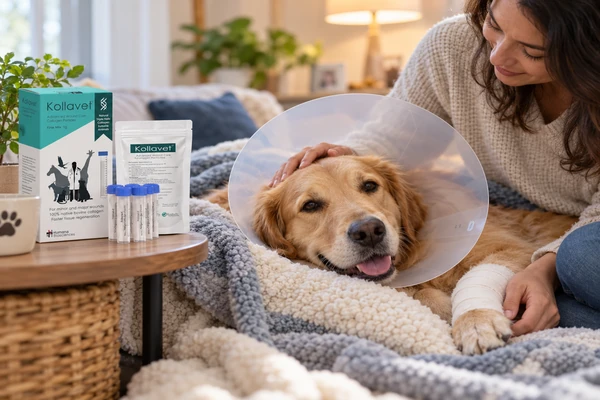
Getting home without making it worse
A dog with a sore paw may not want to walk, and finishing your usual route puts more pressure on the injury. Carry a small dog home if you can, or arrange a ride. With a bigger dog, take the shortest way back and stay off rough ground.
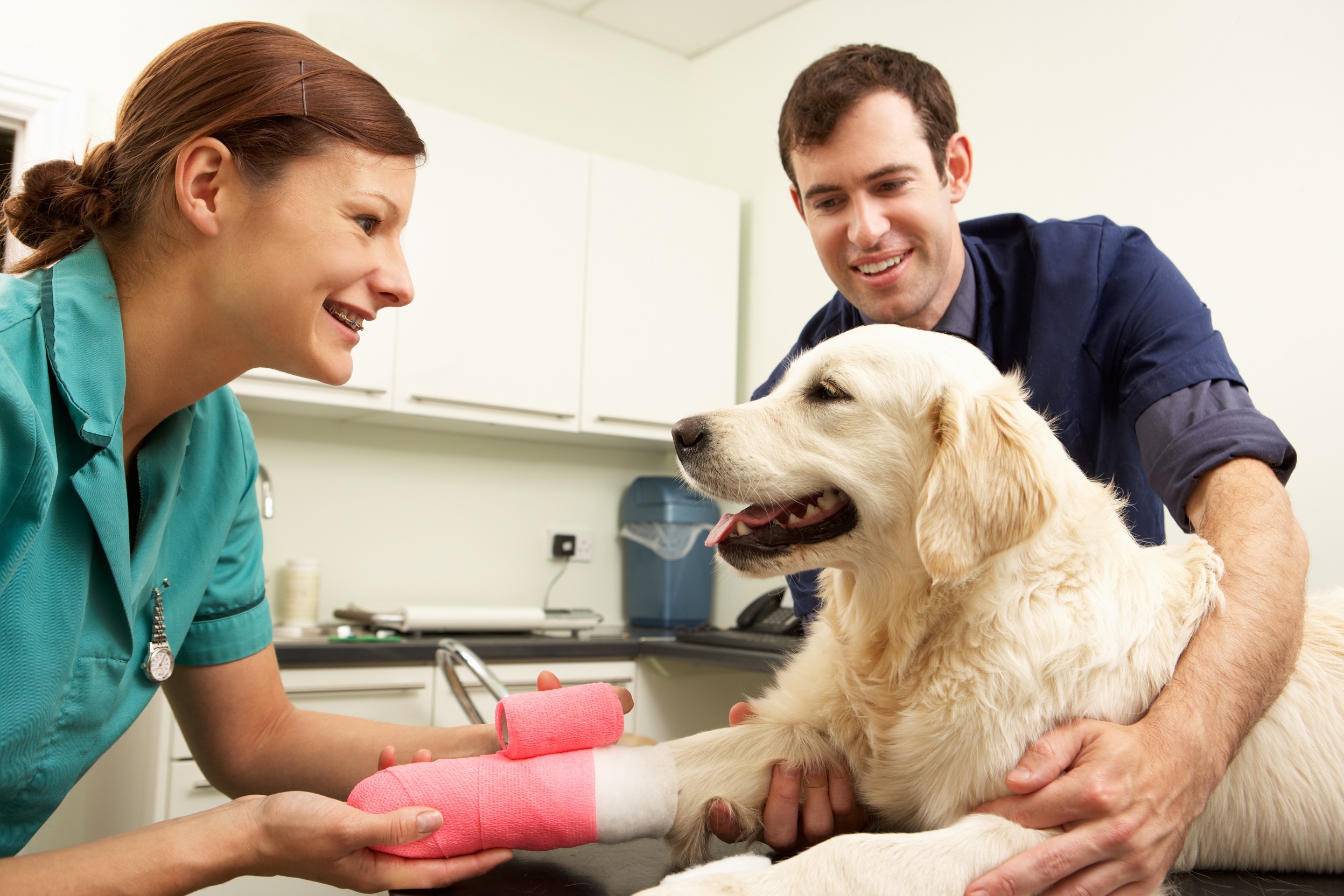
Once you’re home, keep your dog calm and stop any running or jumping. Your veterinarian may suggest a temporary nonstick dressing or protective bandage, but a paw bandage that’s too tight or slips out of place can cause problems of its own.
If a bandage is needed, ask your veterinarian to show you how to put it on. Keep it dry, check the toes for swelling and don’t let your dog chew or lick at it.
Where a collagen dressing fits in
After examining the injury, your veterinarian can recommend wound care based on how deep it is, where it is and what condition it’s in. Some cuts need cleaning and simple protection. Others may need specialized dressings, medication or further treatment.
For suitable wounds, one option your veterinarian may consider is Kollavet® Collagen Particles.
Kollavet is made from 100% Native Type I bovine collagen, and its product information lists foot pad injuries, superficial wounds and traumatic wounds among its intended applications.
Following the product directions, the wound is cleansed first and a layer of particles approximately 1/4 inch thick is applied across the wound surface. An absorbent dressing or aerosol bandage is then used to help secure the particles. The dressing should be changed daily, or as directed by a veterinarian.
The particles are made from bovine material, so they should not be used in animals with a known allergy to bovine-derived products. Your veterinarian can tell you whether a collagen dressing is appropriate for your dog’s wound and how it should be used.
You can also view the broader Kollavet veterinary wound care range for animal wound care options.
Keep an eye on it for the next few days
Your dog will show you how the paw feels. Watch whether they’re putting weight on it, licking it frequently or showing signs of pain.
If your veterinarian has bandaged the paw, keep the bandage clean and dry, and call the clinic if it gets wet, slips or starts to smell. Swelling around the toes, increasing redness, discharge or worsening pain also need veterinary attention.
Stick to the recommended schedule for bandage changes and follow-up visits, even if your dog is eager to get back to normal walks.
For future walks, it can also help to carry a small pet first aid kit with clean gauze, sterile saline, a towel and your veterinarian’s emergency number.
The short version
Check the paw, control the bleeding, keep your dog off the injured foot as much as possible and let your veterinarian decide what comes next.
A few basic supplies and a calm response can make those first few minutes much easier for both you and your dog.