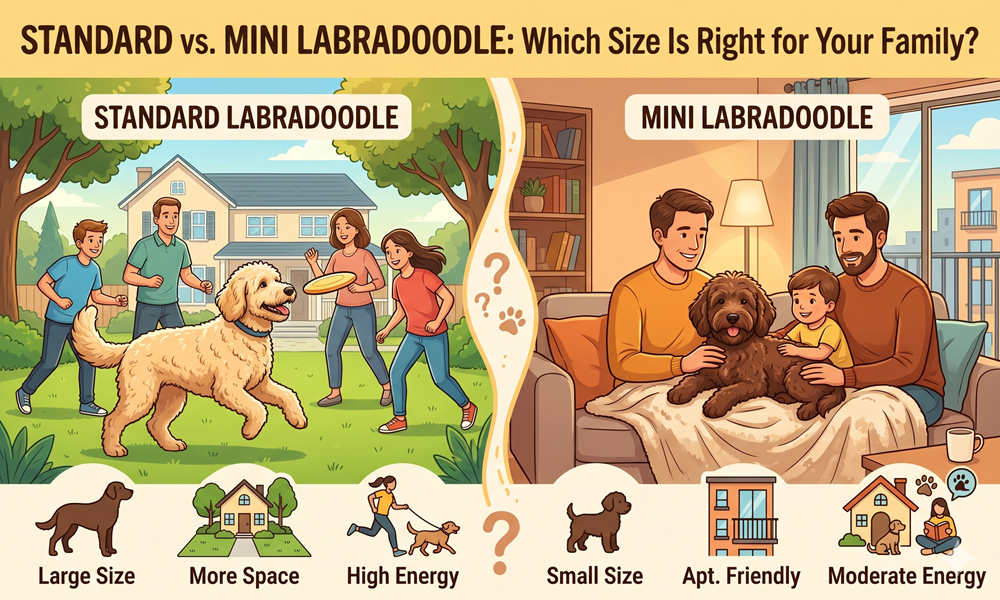
Choosing a Labradoodle is one of the easier breed decisions a family can make. Choosing which size is where the real deliberation begins. Standard and mini Labradoodles share the same core temperament traits that make the breed so popular: intelligence, affectionate nature, low-to-non-shedding coats, and a genuine enthusiasm for human company. What separates them is everything that flows from their size difference, including how much space they need, how much exercise they require, how they interact with young children, and how well they suit different living environments.
Getting that decision right means matching the dog to your actual lifestyle rather than the lifestyle you imagine having. This guide covers the practical differences between the two sizes so you can make a confident, informed choice.
Understanding the Size Difference
A standard Labradoodle typically reaches 21 to 24 inches in height at the shoulder and weighs between 50 and 65 pounds at maturity, though some individuals exceed that range. They are solidly built dogs with the energy levels to match. A mini Labradoodle generally stands 14 to 16 inches and weighs between 15 and 25 pounds, making them roughly a third of the size of their standard counterparts.
That size gap is not just a physical characteristic. It shapes almost every practical aspect of living with the dog, from how much space they take up in your home to how easily a child or elderly family member can manage them on a lead.
Energy Levels and Exercise Requirements
Standard Labradoodles have substantial exercise needs. They are working dog crosses at their core, and without adequate physical and mental stimulation they channel that energy into less desirable behaviours. A well-exercised standard Labradoodle is calm, focused, and easy to live with. An under-exercised one can be destructive. Plan for at least 60 to 90 minutes of active exercise daily, which means a committed owner who genuinely enjoys outdoor activity. If you are working with a reputable Labradoodle breeder in Illinois, they will ask about your lifestyle and activity level before matching you with a puppy, precisely because exercise compatibility matters this much.
Mini Labradoodles are active and playful but more manageable in terms of daily exercise demand. Thirty to forty-five minutes of activity is typically sufficient to keep a mini content and well-behaved. This makes them better suited to apartment or condo living, to owners with less time for extended outdoor sessions, and to families where young children or older adults are the primary caregivers.
Temperament and Family Dynamics
Both sizes share the Labradoodle’s characteristic warmth and sociability. They are people-oriented dogs that do not cope well with prolonged isolation, and both sizes tend to be excellent with children when properly socialised from an early age. The distinction that matters for family selection is more about physical dynamics than personality.
Standard Labradoodles are large, enthusiastic, and sometimes unaware of their own size, particularly as young adults. Around toddlers or very young children, an excited standard Labradoodle can easily knock a small child over without any aggressive intent whatsoever. This is not a disqualifying trait, but it requires supervision and patient training through the adolescent phase. Mini Labradoodles are far easier to manage in households with young children simply because they pose less physical risk when excited.
For families with older children, teenagers, or adults only, the standard Labradoodle is often the preferred choice. Their size makes them more robust playmates, they carry themselves with a certain presence, and many families simply love the experience of a larger dog.
Living Space Considerations
Standard Labradoodles are not well-suited to small apartments unless the owner is exceptionally committed to daily outdoor exercise. They need room to move, and a home with an outdoor space where they can run freely is ideal. In practice, most standard Labradoodle owners have a garden or easy access to open space.
Mini Labradoodles adapt comfortably to smaller living arrangements. They can thrive in apartments provided they receive regular walks and mental enrichment. This adaptability makes them popular in urban and suburban settings where large outdoor space is limited.
Health and Lifespan
Smaller dogs generally live longer than larger breeds, and this holds broadly true for Labradoodles. Mini Labradoodles have an average lifespan of 14 to 16 years. Standard Labradoodles typically live 12 to 14 years. For families with young children who will grow up alongside their dog, this difference in expected companionship length is worth factoring into the decision.
Both sizes benefit enormously from responsible breeding practices. Health screening of parent dogs for hip dysplasia, elbow dysplasia, eye conditions, and hereditary diseases is the foundation of a healthy litter regardless of size. Always ask a breeder for documentation of the health testing performed on both parents before committing to a puppy.
If you are narrowing down your decision or ready to take the next step, reviewing the full Labradoodle adoption process is a useful way to understand what a responsible breeder’s programme looks like, including health guarantees, socialisation standards, and the lifetime support that makes a real difference once your puppy comes home.